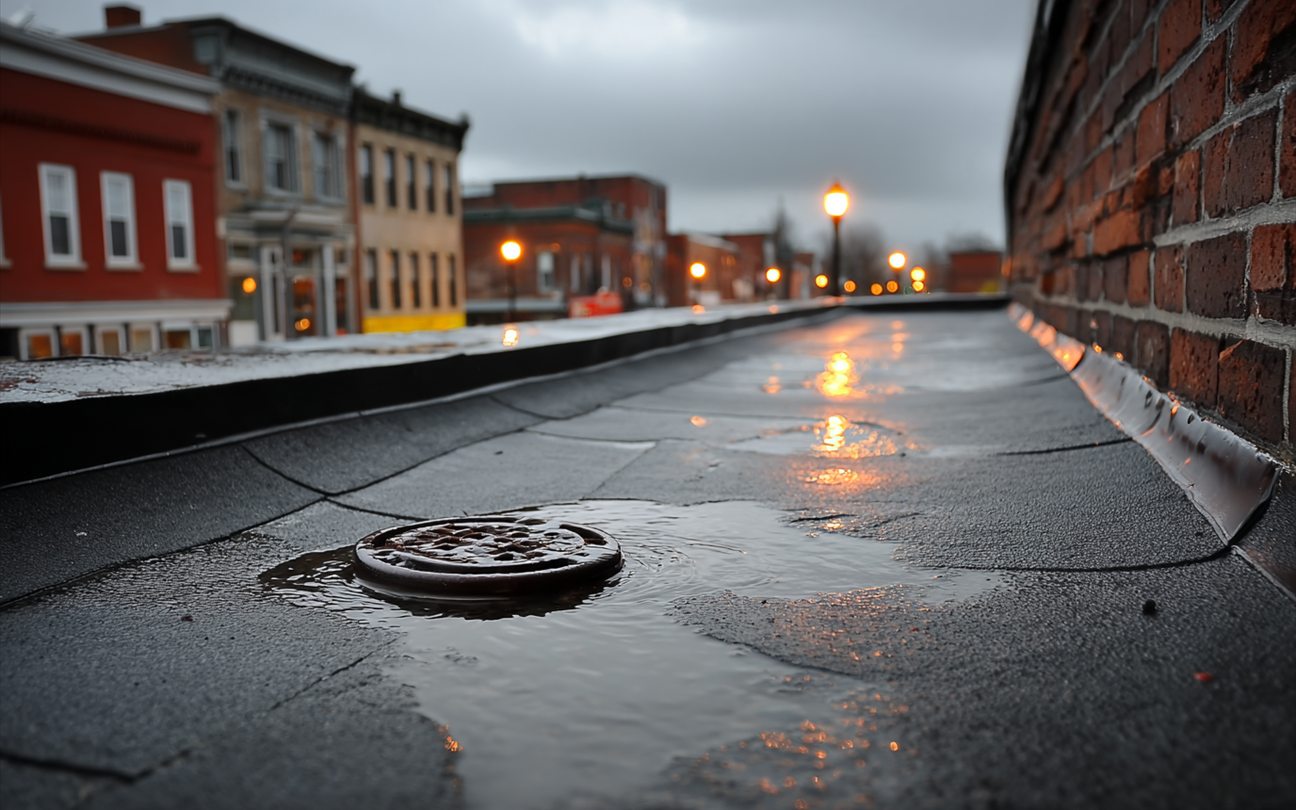
A flat roof is never truly flat. It's built with a slight tilt so rain runs toward a way off the roof. When water collects and sits instead, roofers call it ponding. A little water for a few hours after a storm is normal. Water that's still there two days later is a problem, and it's one of the most common reasons flat roofs in Elizabeth start to leak.
Why Standing Water Matters
- It finds every weak spot. A seam that would stay dry under a passing shower lets water in when it sits under a puddle for days.
- It ages the surface. Sun on a wet spot, then a dry spot, then a wet spot again wears the membrane unevenly.
- It adds weight. Water is heavy. A large puddle can make a low spot lower, which makes the next puddle bigger.
- It freezes. In winter, ice in a low spot can work open seams and edges.
Three Ways Water Leaves a Flat Roof
| Way out | Where it is | What goes wrong |
|---|---|---|
| Interior drain | A grated opening in the roof that runs down a pipe inside the building | Leaves and grit block the strainer; the clamping ring around it loosens |
| Scupper | An opening through the parapet wall, often with a box and a downspout outside | Debris collects at the opening; the flashing around it cracks |
| Edge and gutter | Water runs off a low edge into a gutter | Gutters clog; the roof edge sags |
Where Ponding Comes From
- Clogged outlets. The simplest case. Leaves from street trees and roofing grit collect at drains and scuppers.
- Low spots. Roof boards sag over time, or a heavy unit sat in one place for years.
- Wrong slope. Some older roofs were never pitched well toward their drains.
- Built-up layers. Each re-cover adds thickness at the edges more than in the middle, which can trap water.
What a Roofer Can Do
- Clear and repair the outlets. Clean the drain strainer, replace a loose clamping ring, reflash a scupper.
- Add a drain or scupper. On a roof with one outlet and a big low area, a second way off the roof can solve it.
- Build up low spots. Small areas can be filled under a new section of membrane.
- Tapered insulation at replacement. The most complete fix. Insulation boards cut with a slope are laid under the new roof so every part of it drains to an outlet. This is worth asking about any time a flat roof is replaced.
A Quick Check You Can Do
From a window that overlooks the roof, or from a neighbor's upper floor, look at the roof a day after rain. Note where puddles are, how big they are, and how long they last. Photos help. Don't go onto the roof to check; flat roofs often have no railing, and wet membrane is slippery.
Snow and Drains
Interior drains run through the warm building, so they often keep working in winter. Scuppers and gutters on the outside can freeze shut. If a roof ponds badly after snowmelt, frozen outside outlets are a likely cause. Winter storm outlooks for the area come from the National Weather Service in New York.
Questions
How long is too long for water to sit on a flat roof?
Roofers commonly use about 48 hours after rain stops as the line. Water that lasts longer than that points to a drainage problem worth fixing.
Can I just clear the drain myself?
Clearing a drain means being on the roof, which isn't safe for most people, especially on buildings without railings. A roofer can clear it and check the flashing around it in the same visit.
Will a new roof fix ponding?
Only if the new roof is built to drain. Ask specifically about tapered insulation and the number and location of drains.
Around Elizabeth
Ponding is most common on the flat roofs of Bayway, Frog Hollow and Midtown. Repairs are covered on flat roofs.
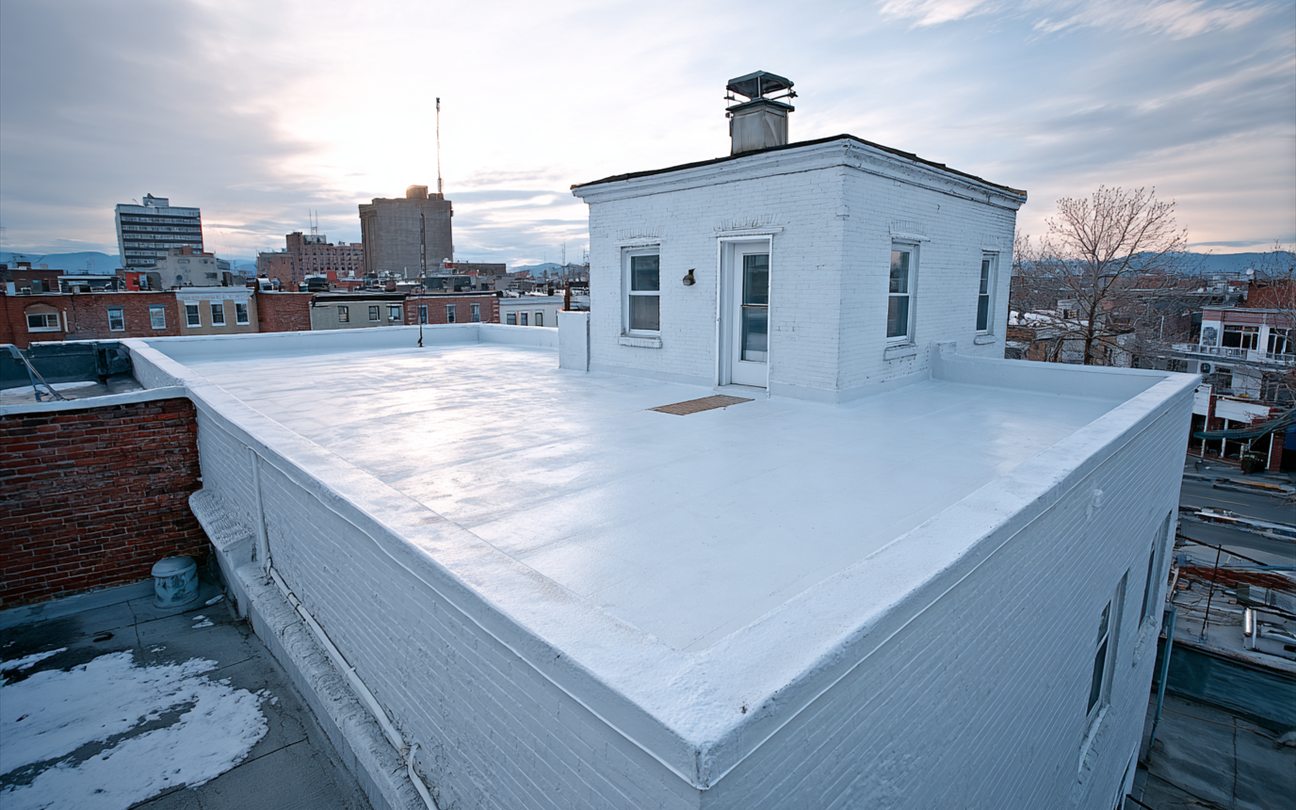
Roof Coating or a New Flat Roof?
When a coating buys real time and when it doesn't.
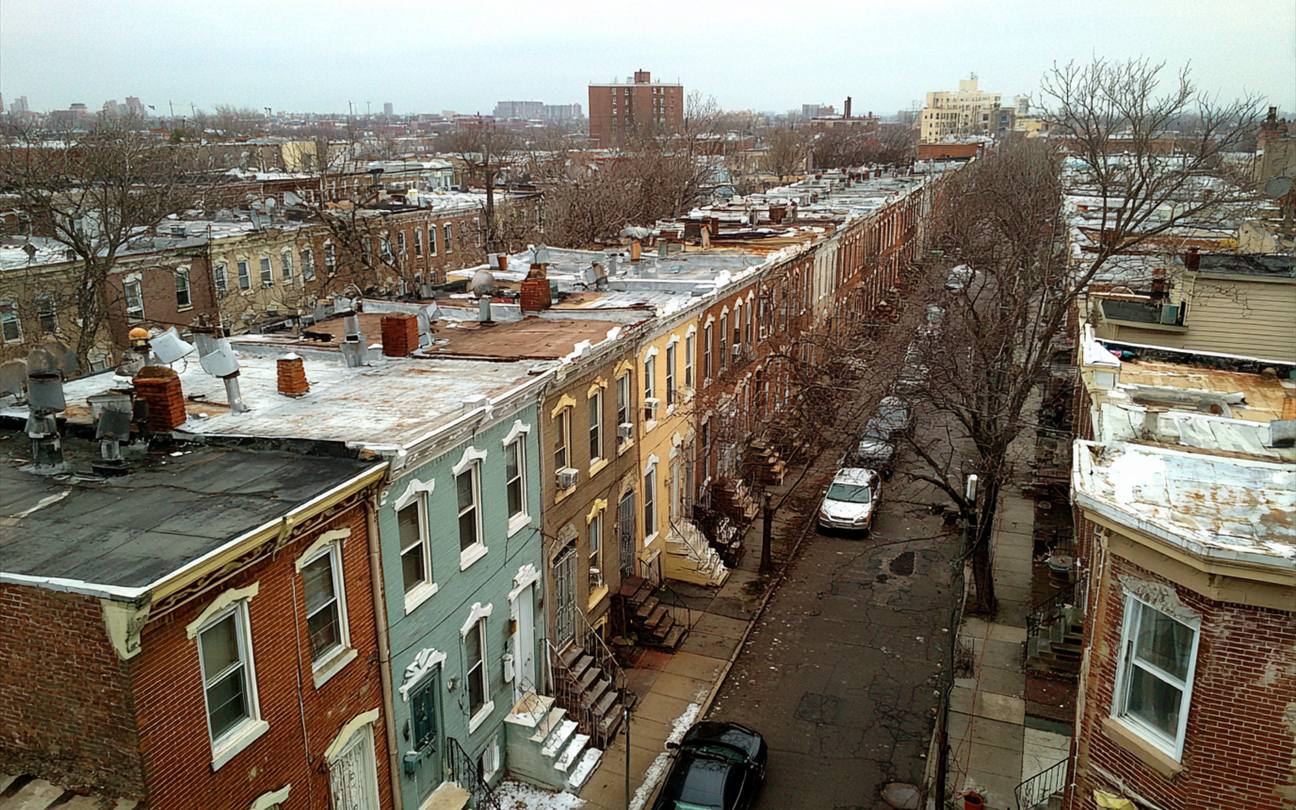
Reroofing an Occupied Two- or Three-Family
Notice, access, noise and the dumpster on a narrow street.